
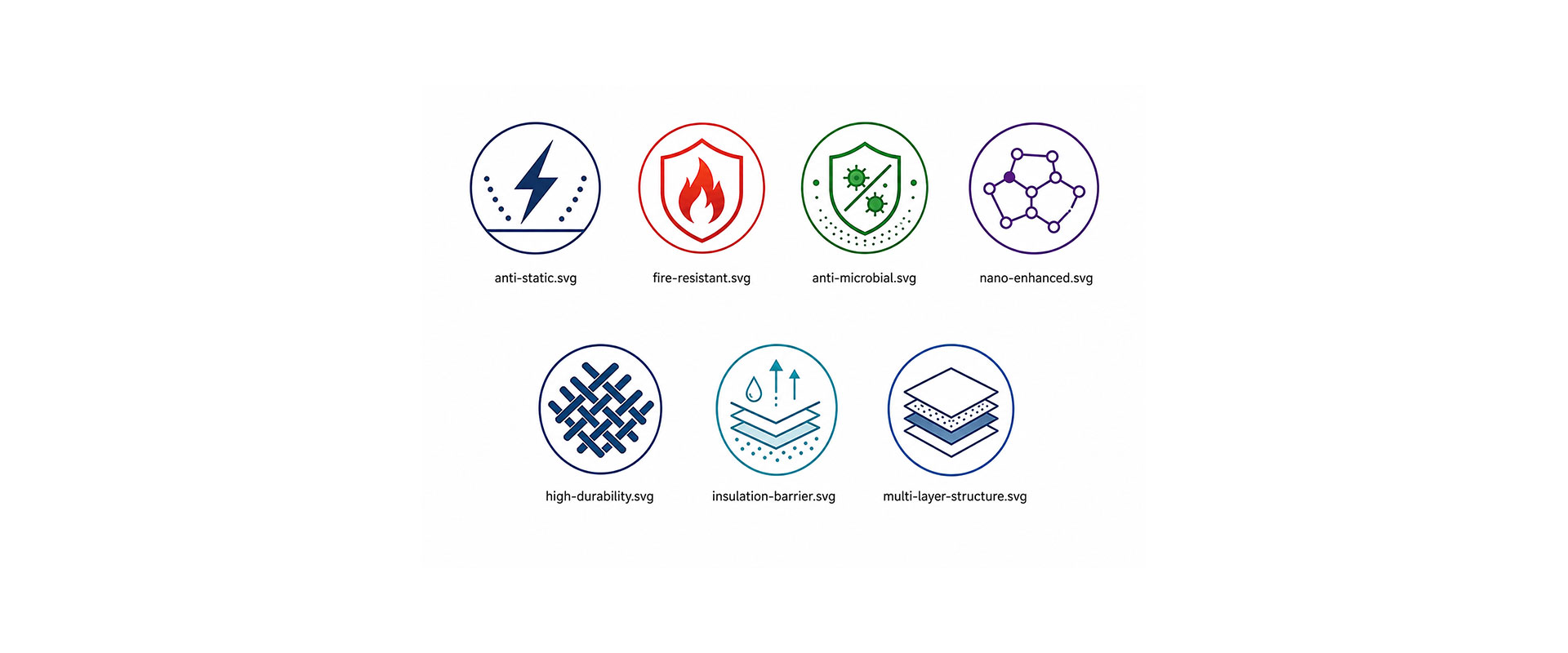
In modern textile manufacturing, functional anti-properties are critical for enhancing safety, performance, and durability across diverse applications. These specialized treatments include anti-static, fire-resistant, anti-microbial, anti-odor, UV-protective, and water-repellent layers, each serving a specific purpose in the textile structure.
Anti-Static Textiles prevent electrostatic charge accumulation, which is vital in sensitive electronics, explosive environments, and industrial settings. By incorporating conductive fibers or surface treatments, anti-static textiles minimize sparks and improve user safety.
Fire-Resistant Layers are designed to withstand ignition and reduce flame spread. Fabrics treated with flame-retardant chemicals or inherently fire-resistant fibers are used in industrial, defense, and automotive applications. These textiles protect both people and property by providing thermal insulation and delaying combustion.
Anti-Microbial & Anti-Odor Textiles improve hygiene and comfort by inhibiting bacterial and fungal growth. Commonly used in healthcare, sportswear, and apparel, these fabrics reduce unpleasant odors and maintain freshness over extended periods. Treatments include silver nanoparticles, quaternary ammonium compounds, or specialized coatings.
UV-Protective Layers block harmful ultraviolet radiation, reducing skin damage and prolonging fabric life. Applied in outdoor clothing, upholstery, and technical fabrics, UV protection enhances both human safety and material durability.
Water-Repellent and Oil-Resistant Textiles prevent moisture penetration and facilitate easy cleaning. These functional layers are essential in protective workwear, outdoor gear, and industrial fabrics, improving both performance and longevity.
Nano-Enhanced Textiles represent the latest innovation, where nanotechnology is used to improve surface functionality, such as self-cleaning, antibacterial action, and enhanced barrier performance. By controlling particle size and coating techniques, manufacturers can customize properties without compromising breathability or flexibility.
By integrating these anti-properties into textile design, manufacturers like ZarifTex deliver advanced, multi-functional materials tailored for automotive, industrial, healthcare, and protective applications. SEO-optimized content focusing on “anti-static textiles,” “fire-resistant fabrics,” and “antimicrobial layers” ensures that technical audiences discover these solutions online.
The synergy of multiple anti-properties within a single textile enhances safety, usability, and environmental resilience. Future developments are expected to combine anti-static, fire, microbial, UV, and water-resistant properties into a single, multi-layered fabric, meeting the evolving needs of modern industries.