
CHROMOJET PRINT
- About Us
- .
- Technology
- .
Chromojet
ZarifMosavar operates advanced Chromojet high-pressure digital printing technology, enabling deep-dye penetration into textile structures rather than surface-level coloration. This technology injects color directly into the fiber core, ensuring superior durability, vibrancy, and long-term stability.
Key Technical Features
- Printing Method: High-pressure jet injection (non-contact)
- Color Penetration:Deep fiber-level penetration (not surface coating)
- Maximum Working Width: Up to 4 meters
- Compatible Structures: Tufted carpets, felt-based carpets
- Color System: Multi-channel independent color tanks
Performance Advantages
- Exceptional color fastness and wash resistance
- No fading or surface abrasion
- Long-term aesthetic stability
- Suitable for high-traffic commercial environments
Production Capabilities
- Minimum order flexibility (from 1,000 m² per design)
- Seamless reproduction from sampling to mass production
- Unlimited design freedom with precise digital control
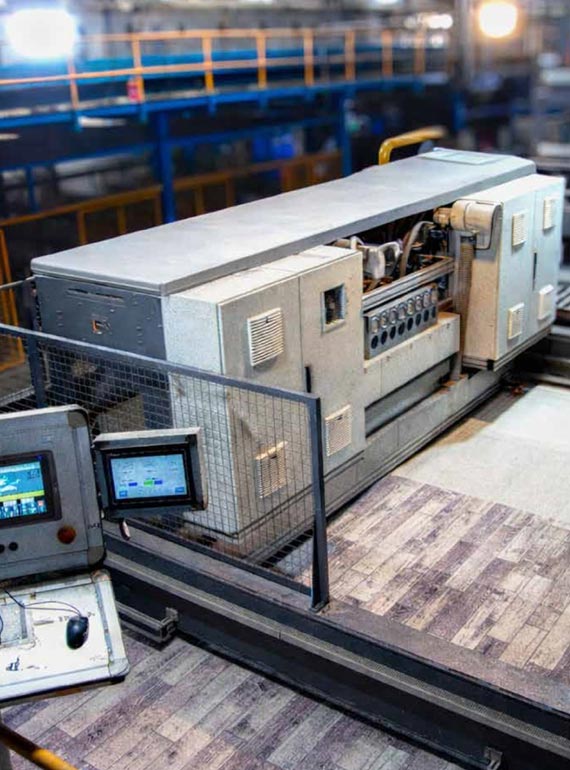
Applications
- Commercial and hospitality carpets
- Architectural interiors
- Custom-designed printed flooring
Many of our printed products are often perceived as woven rather than printed and this perception is fully justified.
This is because the dye penetrates deep into the root of the yarn, a capability made possible by our advanced high-pressure Chromojet technology. Through precisely engineered jet nozzles and specialized textile-grade thickeners, color is driven into the yarn structure rather than deposited on the surface.
Yes, this is not surface printing.
This is deep penetration printing.
Such a process guarantees exceptional color durability, long-term stability, and lasting visual beauty, enabling our customers to confidently offer aesthetic warranties on ZARIFMOSAVAR printed products.
Material Independence: Felt or Tufted – No Limitation
Whether felt or tufted structures, our Chromojet line handles them all seamlessly. The system is capable of printing, fixing, and finishing:
- Felt products from 300 g/m²
- Tufted carpets up to 2,000 g/m²
All at a production width of up to 4 meters, with no limitation on design size, scale, or complexity.
Minimal Order Constraints – Maximum Commercial Advantage
One of the most strategic advantages of ZARIFMOSAVAR’s Chromojet system is its extremely low order limitation.
Thanks to our multiple color tanks and independent dye reservoirs, we impose no restrictive minimum order volumes.
For each design or more precisely, for each color palette we accept orders starting from 1,000 square meters.
For traders and commercial partners, this represents a significant reduction in market risk, enabling flexible product launches and controlled inventory strategies.
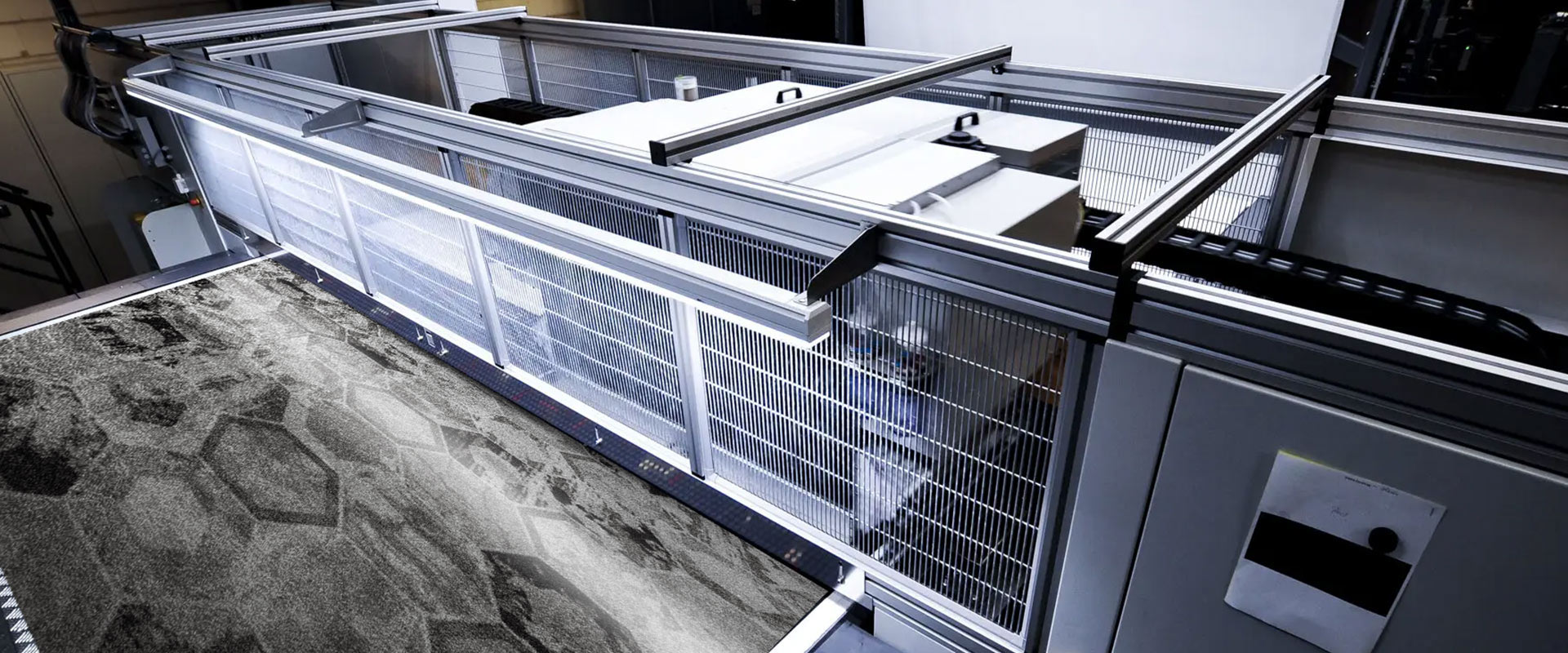
From Concept to Industry: Advanced Sampling Capability
To convert ideas into industrial-grade products, ZARIFMOSAVAR operates advanced sampling lines.
Our sampling unit is effectively a scaled-down replica of the industrial Chromojet line, ensuring absolute consistency between sample and mass production.
The product you approve at the sampling stage is exactly the same product delivered in industrial volumes no surprises, no compromises.
Unlimited Design Freedom There are no design limitations.
Any concept, artwork, or visual expectation can be transformed into a printed carpet simply share your vision.
Our in-house design team re-engineers your concept specifically for Chromojet application, optimizing it for jet loading, color behavior, and structural compatibility before producing the first prototypes.
Superior Penetration and Fixation – The Signature of ZARIFMOSAVAR Chromojet
Deep penetration and exceptional fixation are the defining characteristics of ZARIFMOSAVAR’s Chromojet technology.
Through a controlled combination of high temperature, steam, pressure, and chemical fixation, dyes are locked inside the crystalline structure of the polymer. Yes locked.
- We do not spray color onto the surface
- We inject color into the polymer matrix itself
The result is a final product that does not bleed, fade, or degrade under washing, detergents, or long-term use.
This dyeing mechanism is inspired by sustainable and organic coloring principles historically used in handwoven carpets and yarn hank dyeing preserving the softness, elasticity, and filament integrity of the fibers.
